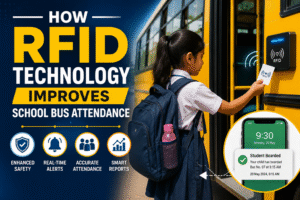
A Biometric Attendance System is becoming an essential solution for schools, colleges, offices, hospitals, and organizations that want to automate attendance management and reduce manual work. Traditional attendance methods such as paper registers, Excel sheets, and manual entries consume time, increase administrative workload, and often lead to errors.
Modern institutions require fast, secure, and accurate attendance tracking solutions. This is where biometric technology plays a major role. By using fingerprint recognition, facial recognition, RFID cards, and mobile-based tracking, institutions can streamline operations and improve efficiency.
A Biometric Attendance System not only saves time but also eliminates proxy attendance, improves transparency, and provides real-time attendance monitoring.
What Is a Biometric Attendance System?
A Biometric Attendance System is a digital solution that records attendance using unique biological characteristics such as:
- Fingerprints
- Face recognition
- Iris recognition
- Palm recognition
These systems automatically identify individuals and store attendance data securely in software or cloud platforms.
Biometric attendance solutions are commonly used in:
- Schools and colleges
- Corporate offices
- Factories and industries
- Hospitals
- Government departments
- Coaching institutes
- Research centers
Problems with Traditional Attendance Systems
Many organizations still use manual attendance methods, which create several operational problems.
1. Time-Consuming Process
Manual attendance takes valuable time every day. Teachers and HR staff spend extra time recording and maintaining attendance records.
2. Human Errors
Manual entries often result in:
- Wrong attendance marking
- Duplicate records
- Missing data
- Incorrect calculations
3. Proxy Attendance
Students or employees can mark attendance for others, reducing transparency and discipline.
4. Difficult Record Maintenance
Maintaining physical registers and spreadsheets becomes difficult, especially in large institutions with thousands of users.
5. Delayed Reporting
Generating attendance reports manually requires additional effort and slows decision-making.
How a Biometric Attendance System Reduces Manual Work
1. Automated Attendance Tracking
The biggest advantage of a Biometric Attendance System is automation. Attendance is marked automatically when a person scans their fingerprint or face.
There is no need for:
- Paper registers
- Manual signatures
- Spreadsheet entries
- Attendance calculations
This reduces administrative workload significantly.
2. Faster Attendance Process
Biometric systems reduce the time required for attendance marking.
For example:
- A classroom with 70 students can complete attendance within minutes.
- Employee check-in/check-out becomes faster and smoother.
This saves operational time daily.
3. Elimination of Proxy Attendance
Since biometric traits are unique for every individual, fake attendance becomes almost impossible.
This ensures:
- Accurate attendance records
- Better accountability
- Improved discipline
Educational institutions especially benefit from this feature.
4. Real-Time Attendance Monitoring
Modern Biometric Attendance Systems provide live dashboards and cloud-based reporting tools.
Administrators can monitor:
- Present employees
- Absent students
- Late arrivals
- Shift timing
- Attendance summaries
All reports are generated automatically without manual work.
5. Improved Payroll Management
In offices and factories, attendance systems can integrate directly with payroll software.
This automates:
- Salary calculations
- Overtime tracking
- Leave deductions
- Shift management
HR departments save significant time and reduce payroll errors.
6. Mobile and Cloud Accessibility
Cloud-based attendance systems allow organizations to monitor attendance remotely.
Benefits include:
- Multi-branch monitoring
- Remote workforce tracking
- Mobile attendance access
- Centralized data management
Administrators can access reports anytime from mobile devices or computers.
7. Better Data Accuracy and Security
Manual systems are vulnerable to data loss and manipulation. A Biometric Attendance System stores attendance securely in digital databases.
Advantages include:
- Accurate records
- Secure backups
- Easy report generation
- Long-term data storage
This improves operational reliability.
Benefits of Biometric Attendance Systems for Educational Institutions
Schools and colleges use biometric systems to improve student attendance monitoring and campus management.
Key Benefits
Improved Student Discipline
Students cannot misuse attendance systems through proxy attendance.
Faster Classroom Attendance
Teachers save teaching time by avoiding manual attendance processes.
Parent Notifications
Some systems send instant SMS or app notifications to parents regarding student attendance.
Better Administration
Management receives automated reports and analytics without additional work.
Enhanced Security
Only authorized students and staff can access campus facilities.
Benefits for Corporate Offices and Businesses
Organizations use biometric systems to improve workforce efficiency and HR management.
Major Advantages
- Accurate employee attendance
- Reduced payroll disputes
- Better productivity tracking
- Simplified HR operations
- Improved workplace security
- Easy shift management
A Biometric Attendance System helps businesses reduce operational costs and improve efficiency.
Types of Biometric Attendance Systems
1. Fingerprint Attendance System
This system uses fingerprint scanning for attendance verification. It is one of the most widely used biometric technologies.
Features:
- Fast authentication
- High accuracy
- Affordable implementation
2. Face Recognition Attendance System
Face recognition systems use AI-based cameras to identify users without physical contact.
Advantages:
- Touchless attendance
- Faster identification
- Better hygiene and safety
3. RFID and Biometric Hybrid Systems
These systems combine RFID smart cards with biometric verification for enhanced security.
Common Uses:
- Schools
- Universities
- Industrial facilities
- Smart campuses
4. Mobile-Based Attendance Systems
Mobile attendance applications allow attendance marking through GPS and smartphones.
Ideal For:
- Field employees
- Remote teams
- Multi-location organizations
Features to Look for in a Biometric Attendance System
When selecting a system, institutions should consider the following features:
- Real-time attendance tracking
- Cloud-based reporting
- Mobile app support
- Payroll integration
- Face recognition support
- RFID compatibility
- Multi-user management
- Data security and backup
- Dashboard analytics
Choosing the right solution improves operational efficiency and long-term performance.
Why Institutions Are Adopting Biometric Attendance Systems
As institutions grow larger, manual attendance management becomes inefficient and difficult to maintain.
A Biometric Attendance System helps organizations:
- Save time
- Reduce paperwork
- Improve attendance accuracy
- Increase operational transparency
- Automate administrative tasks
This allows staff and management to focus on productivity instead of manual record maintenance.
Future of Biometric Attendance Systems
Modern attendance solutions are evolving rapidly with advanced technologies such as:
- Artificial Intelligence (AI)
- Cloud computing
- Mobile integration
- Touchless facial recognition
- IoT-based smart campus systems
Future biometric systems will become even more secure, intelligent, and efficient.
Conclusion
A Biometric Attendance System is one of the most effective solutions for reducing manual work in institutions and organizations. By automating attendance tracking, eliminating human errors, and generating real-time reports, these systems improve efficiency and productivity significantly.
Whether it is a school, college, office, hospital, or industrial organization, implementing a biometric attendance solution helps streamline operations, reduce administrative workload, and improve security.
Institutions looking for modern attendance management should invest in reliable biometric technology to achieve accurate, secure, and automated attendance monitoring.