How Cashless Systems Prevent Fraud and Improve Transparency has become an important topic for organizations embracing digital transformation. Schools, colleges, hospitals, factories, corporate offices, retail stores, and campuses are replacing traditional cash handling with secure digital payment solutions to improve financial security and operational efficiency.
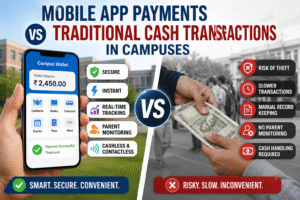
Handling physical cash often results in accounting errors, revenue leakage, theft, unauthorized transactions, and time-consuming reconciliation. A cashless payment system eliminates these challenges by replacing manual cash transactions with secure digital payments using RFID cards, NFC cards, smart ID cards, QR codes, UPI, mobile wallets, and biometric authentication.
Every transaction is automatically recorded, providing complete visibility into financial activities while significantly reducing fraud risks. In this article, you’ll learn how cashless systems prevent fraud and improve transparency and why they are becoming an essential investment for modern organizations.
What Is a Cashless System?
A cashless system is a digital payment solution that allows users to make purchases without physical cash. Instead of handling currency, payments are processed electronically through secure technologies such as:
- RFID Smart Cards
- NFC Cards
- QR Codes
- Mobile Wallets
- UPI Payments
- Biometric Authentication
- Employee ID Cards
- Student Smart Cards
Cashless payment systems are widely implemented in:
- Schools
- Colleges
- Universities
- Corporate Offices
- Hospitals
- Manufacturing Units
- Industrial Campuses
- Hostels
- Cafeterias
- Retail Stores
These systems simplify payment processing while improving transaction security and financial transparency.
Why Traditional Cash Transactions Create Problems
Although cash payments remain common in many organizations, they create several operational and financial challenges.
Some of the most common issues include:
- Cash theft
- Fake currency
- Manual accounting errors
- Revenue leakage
- Missing receipts
- Unauthorized discounts
- Slow payment processing
- Difficult financial audits
- Human errors in billing
- Poor transaction visibility
Since cash transactions often leave little or no digital record, identifying fraudulent activities becomes extremely difficult.
10 Ways Cashless Systems Prevent Fraud and Improve Transparency
1. Every Transaction Is Digitally Recorded
One of the biggest advantages of a cashless payment system is automatic transaction recording.
Every payment securely stores:
- User information
- Date
- Time
- Transaction amount
- Payment location
- Transaction ID
This creates a permanent audit trail that cannot easily be manipulated.
Benefit
Organizations can quickly identify unusual transactions, investigate discrepancies, and maintain complete financial transparency.
2. Eliminates Cash Theft
Cash counters are vulnerable to:
- Internal theft
- Missing cash
- Robbery
- Counting mistakes
Cashless systems minimize or completely eliminate the need to store physical cash.
This significantly reduces financial losses and improves operational security.
3. Prevents Unauthorized Transactions
Modern cashless systems allow administrators to assign spending permissions.
Examples include:
- Student daily spending limits
- Employee meal allowances
- Department budgets
- Purchase restrictions
- Visitor payment limits
Only authorized transactions are approved, reducing misuse of organizational funds.
4. Reduces Human Errors
Manual accounting frequently causes:
- Incorrect billing
- Duplicate entries
- Wrong calculations
- Missing receipts
- Delayed reporting
Cashless software automatically performs calculations and records every transaction accurately, improving financial reporting.
5. Secure User Authentication
Modern payment systems support multiple authentication methods, including:
- RFID Cards
- NFC Cards
- QR Codes
- Fingerprint Authentication
- Face Recognition
- Smart ID Cards
Only authorized users can access payment services, significantly reducing fraudulent activities.
6. Instant Payment Verification
Unlike traditional cash transactions, digital payments are verified instantly.
Organizations no longer need to:
- Count currency
- Verify cash
- Return change
- Prepare manual receipts
This speeds up payment processing while reducing operational errors.
7. Prevents Duplicate Payments
Each transaction receives a unique transaction ID.
The software automatically detects duplicate payment attempts, preventing:
- Double billing
- Duplicate charges
- Payment confusion
- Accounting discrepancies
8. Real-Time Financial Reports
Administrators can access live reports showing:
- Daily collections
- Monthly revenue
- Department-wise expenses
- Student spending
- Employee purchases
- Outstanding balances
These reports support faster financial decision-making and improve transparency.
9. Complete Audit Trail
Every transaction remains permanently stored within the system.
Auditors can easily review:
- Who made the payment
- What was purchased
- Payment amount
- Payment method
- Date and time
This simplifies compliance and financial auditing.
10. Better Accountability
Every payment is linked to a specific user account.
Organizations always know:
- Who initiated the transaction
- Who approved it
- When it occurred
- What was purchased
This accountability minimizes disputes and builds trust.
Benefits of Cashless Payment Systems
Apart from fraud prevention, organizations also enjoy numerous operational benefits.
These include:
- Faster payments
- Improved customer experience
- Reduced paperwork
- Lower operational costs
- Secure cloud reporting
- Better financial management
- Easy ERP integration
- Real-time analytics
- Contactless transactions
- Improved budgeting
Industries That Benefit from Cashless Systems
Schools and Colleges
- Smart Student Cards
- Cashless Cafeterias
- Library Payments
- Transport Payments
- Hostel Purchases
Corporate Offices
- Employee Cafeterias
- Visitor Payments
- Office Cafés
- Employee Allowances
Hospitals
- Pharmacy Payments
- Staff Meal Cards
- Visitor Cafeterias
- Digital Billing
Manufacturing Companies
- Factory Canteens
- Employee Meal Cards
- Welfare Fund Management
- Cashless Vending Machines
Retail Stores
- Faster Checkout
- Secure Billing
- Better Inventory Tracking
- Digital Receipts
Best Practices for Implementing a Cashless System
To maximize security and transparency:
- Use encrypted payment technology.
- Enable role-based user access.
- Conduct regular security audits.
- Set transaction limits.
- Train employees on secure payment practices.
- Monitor reports regularly.
- Integrate with ERP software.
- Connect with attendance and access control systems.
Future of Cashless Payment Systems
Digital payment technologies continue to evolve rapidly.
Future innovations include:
- Artificial Intelligence (AI)
- Facial Recognition Payments
- Cloud-Based Analytics
- Internet of Things (IoT)
- Contactless NFC Payments
- Biometric Authentication
- Mobile Wallet Integration
These technologies will further improve security, convenience, and financial transparency across organizations.
Conclusion
How Cashless Systems Prevent Fraud and Improve Transparency is no longer just a business trend—it is a necessity for organizations seeking secure, efficient, and accountable financial operations. By replacing manual cash handling with digital payment solutions, organizations can eliminate theft, reduce human errors, improve financial reporting, and create a complete audit trail for every transaction.
Whether you manage a school, college, hospital, factory, corporate office, or retail business, implementing a modern cashless payment system can streamline operations, strengthen financial security, and enhance transparency. As digital payment technologies continue to advance, investing in a reliable cashless system today will help build a safer, smarter, and more efficient future.
Frequently Asked Questions
1. What is a cashless system?
A cashless system is a digital payment solution that enables transactions through RFID cards, NFC cards, QR codes, mobile wallets, UPI, or biometric authentication instead of physical cash.
2. How do cashless systems prevent fraud?
They prevent fraud by recording every transaction digitally, requiring secure user authentication, enforcing spending limits, maintaining audit trails, and reducing opportunities for theft and unauthorized transactions.
3. Which industries benefit from cashless payment systems?
Schools, colleges, hospitals, factories, corporate offices, cafeterias, hostels, retail stores, and industrial campuses can all benefit from cashless payment systems.
4. Are cashless systems secure?
Yes. Modern cashless systems use encryption, secure authentication, role-based access controls, and real-time monitoring to protect financial transactions.
5. What are the main benefits of a cashless payment system?
The major benefits include fraud prevention, financial transparency, faster payments, reduced paperwork, lower operational costs, real-time reporting, improved accountability, and better financial management.