An Attendance Management System is one of the most essential HR solutions for modern businesses. It helps organizations accurately track employee attendance, monitor working hours, manage leave requests, calculate overtime, and streamline payroll processing. Whether you run a small business or a large enterprise, implementing an Attendance Management System can significantly improve operational efficiency and workforce accountability.
Traditional attendance registers and spreadsheets are often time-consuming, prone to errors, and difficult to manage. Today’s businesses rely on automated Attendance Management Systems powered by biometric devices, facial recognition, RFID technology, mobile apps, and cloud-based platforms to simplify attendance tracking and improve productivity.
This comprehensive guide explains everything you need to know about an Attendance Management System, including its benefits, features, types, challenges, and best practices.
What is an Attendance Management System?
An Attendance Management System is software or hardware designed to record, monitor, and manage employee attendance. It automatically tracks employee check-in and check-out times, working hours, overtime, leave, holidays, and shift schedules.
Instead of maintaining paper registers or manually updating spreadsheets, organizations can automate attendance records, reducing administrative work while improving data accuracy.
Modern Attendance Management Systems integrate with payroll software, HR management platforms, and employee self-service portals to create a seamless workforce management experience.
Why is an Attendance Management System Important?
Every organization depends on employee attendance to maintain productivity and ensure smooth business operations. An Attendance Management System helps HR teams and managers monitor attendance in real time while reducing manual effort.
The system provides accurate attendance records, minimizes payroll errors, prevents time theft, and helps businesses comply with labor regulations. It also enhances transparency, allowing employees to view their attendance history and leave balances anytime.
Key Features of an Attendance Management System
1. Employee Check-In and Check-Out
Employees can record attendance using fingerprint scanners, facial recognition devices, RFID cards, QR codes, or mobile applications.
2. Biometric Attendance
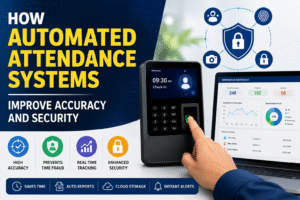
Biometric technology verifies employee identity through fingerprints or facial recognition, preventing buddy punching and unauthorized attendance marking.
3. Leave Management
Employees can apply for leave online, while managers can review and approve requests through a centralized dashboard.
4. Shift Management
Organizations can manage fixed, rotational, night, and flexible work shifts with ease.
5. Overtime Calculation
The system automatically calculates overtime hours, holiday work, and weekend shifts, ensuring accurate payroll processing.
6. Payroll Integration
Attendance data integrates directly with payroll software, reducing manual calculations and ensuring employees are paid accurately.
7. Real-Time Reports
Managers can access daily, weekly, and monthly attendance reports, absenteeism reports, and overtime summaries.
8. Cloud Accessibility
Cloud-based Attendance Management Systems allow HR teams to access attendance records from anywhere with an internet connection.
Types of Attendance Management Systems
Manual Attendance System
Employees sign attendance registers manually. Although inexpensive, this method is prone to human error and time-consuming.
Biometric Attendance System
Uses fingerprint or iris recognition to accurately verify employee identity and eliminate attendance fraud.
Face Recognition Attendance System
A contactless solution that uses AI-powered facial recognition for secure and fast attendance marking.
RFID Attendance System
Employees use RFID smart cards to check in and out, making it ideal for schools, offices, and manufacturing units.
Mobile Attendance System
Employees working remotely or in the field can mark attendance using GPS-enabled mobile applications.
Cloud-Based Attendance Management System
Cloud solutions offer centralized attendance management, automatic backups, and multi-location support.
15 Powerful Benefits of an Attendance Management System
1. Accurate Attendance Tracking
Automates attendance records and eliminates manual errors.
2. Faster Payroll Processing
Attendance data is automatically transferred to payroll software.
3. Improved Employee Accountability
Employees become more punctual and responsible.
4. Prevents Buddy Punching
Biometric verification ensures only authorized employees mark attendance.
5. Saves HR Time
Reduces paperwork and repetitive administrative tasks.
6. Better Workforce Planning
Managers can identify attendance trends and staffing requirements.
7. Real-Time Attendance Monitoring
View attendance data instantly from any location.
8. Automated Leave Management
Simplifies leave requests and approvals.
9. Reduced Payroll Errors
Accurate attendance ensures correct salary calculations.
10. Improved Productivity
Employees spend less time on manual attendance processes.
11. Better Compliance
Maintains accurate records for audits and labor law compliance.
12. Remote Employee Tracking
Supports mobile attendance with GPS and geofencing.
13. Enhanced Data Security
Cloud-based systems securely store attendance records.
14. Cost Savings
Reduces administrative costs and minimizes payroll disputes.
15. Better Decision-Making
Provides detailed reports and analytics for workforce management.
Common Challenges in Attendance Management
Organizations often face challenges such as manual attendance errors, absenteeism, time theft, payroll inaccuracies, shift scheduling conflicts, and remote workforce monitoring. Implementing an automated Attendance Management System helps address these issues efficiently.
Best Practices for Attendance Management
To maximize the benefits of an Attendance Management System:
- Create a clear attendance policy.
- Use biometric or facial recognition technology.
- Integrate attendance with payroll software.
- Monitor attendance reports regularly.
- Automate leave management.
- Train employees on attendance procedures.
- Conduct regular attendance audits.
- Secure attendance data with proper access controls.
Industries That Use Attendance Management Systems
Attendance Management Systems are widely used in:
- Corporate Offices
- Manufacturing
- Healthcare
- Educational Institutions
- Government Organizations
- Retail Stores
- Hospitality
- Banking
- Logistics
- Construction
- IT Companies
- Warehouses
How to Choose the Right Attendance Management System
Before investing in an Attendance Management System, consider the following:
- Organization size
- Number of employees
- Biometric or facial recognition support
- Mobile attendance capabilities
- Cloud accessibility
- Payroll integration
- Reporting and analytics
- Ease of use
- Customer support
- Data security
- Scalability
Selecting a solution that aligns with your organization’s needs ensures long-term efficiency and return on investment.
Future Trends in Attendance Management
Attendance management continues to evolve with new technologies such as:
- AI-powered attendance analytics
- Touchless facial recognition
- Mobile-first attendance solutions
- Cloud-native HR platforms
- Predictive workforce analytics
- IoT-enabled attendance devices
- Advanced biometric authentication
- Real-time workforce dashboards
These innovations help businesses create smarter, more secure, and more efficient attendance management processes.
Frequently Asked Questions
What is an Attendance Management System?
An Attendance Management System is a software or hardware solution used to track employee attendance, working hours, leave, shifts, and overtime.
Why is an Attendance Management System important?
It improves attendance accuracy, streamlines payroll, reduces manual work, and enhances employee accountability.
Which attendance method is the most secure?
Biometric and facial recognition attendance systems are among the most secure because they verify employee identity before recording attendance.
Can Attendance Management Systems integrate with payroll software?
Yes. Most modern systems integrate seamlessly with payroll software to automate salary calculations and reduce errors.
Is cloud-based attendance management secure?
Yes. Reputable cloud-based systems use encryption, backups, and secure access controls to protect attendance data.
Conclusion
An Attendance Management System is more than just a tool for tracking employee attendance—it is a strategic solution for improving workforce efficiency, reducing administrative workload, and ensuring accurate payroll processing. By automating attendance, leave management, shift scheduling, and reporting, businesses can enhance productivity, strengthen compliance, and create a more transparent workplace.
Whether you operate a small business or a large enterprise, investing in the right Attendance Management System can help streamline HR operations, improve employee satisfaction, and support long-term organizational growth.